Montessori often sounds beautiful in theory — calm children, wooden shelves, peaceful focus — and completely impossible in real life. Especially when you’re a tired parent or a babysitter juggling snacks, siblings, and a ticking clock.
The good news? Montessori at home doesn’t have to be perfect, expensive, or Instagram-ready to work.
It just has to be intentional, simple, and realistic.
Below are practical Montessori-inspired ideas that real families and caregivers can actually use — starting today.
🌱 🧺What Montessori at Home Really Means (and What It Doesn’t)
Let’s clear something up first.
Montessori at home is not:
- A fully furnished Montessori classroom
- A house full of wooden toys only
- Children working silently all day
Montessori at home is:
- Respecting the child as a capable human
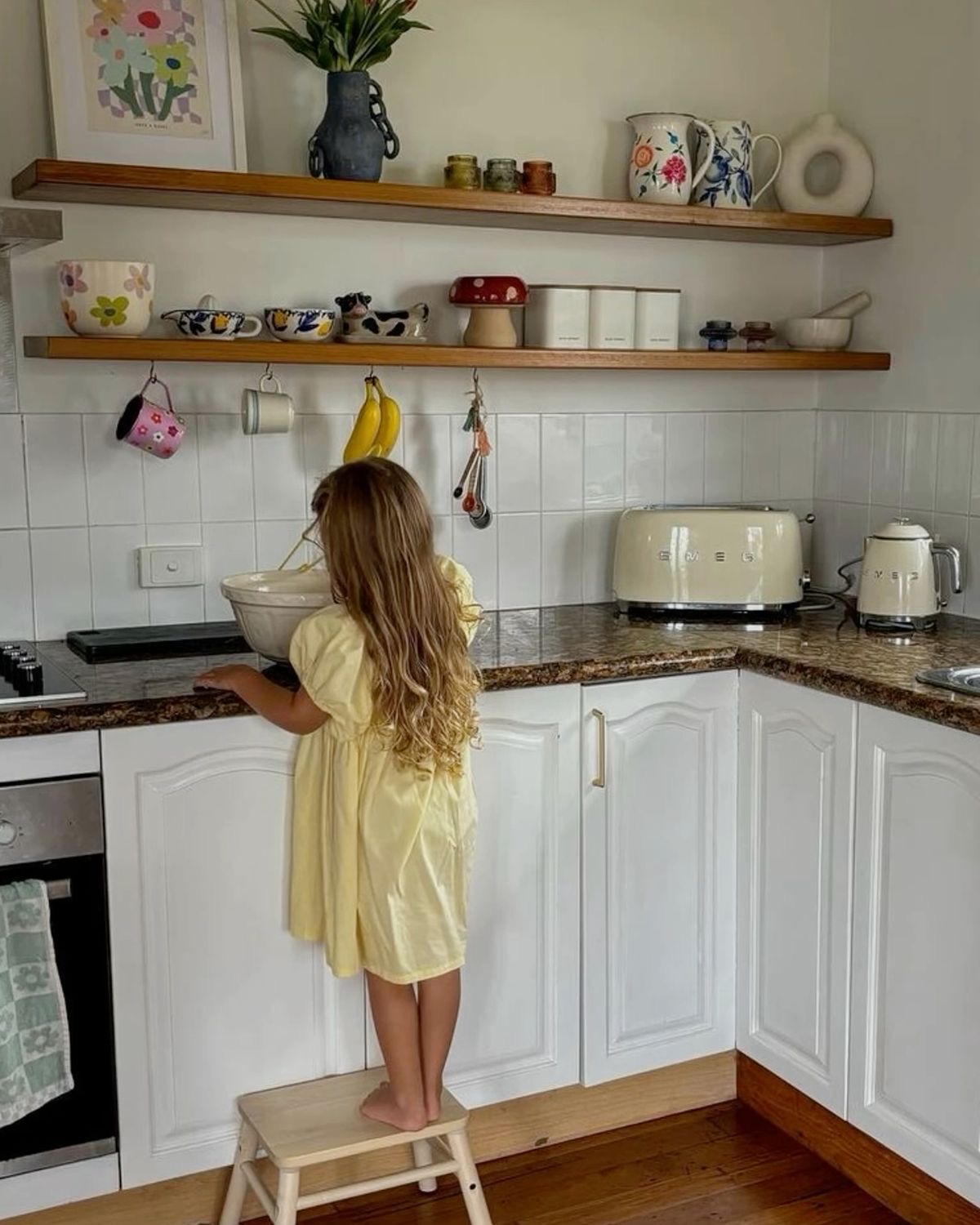
- Creating small opportunities for independence
- Following the child’s interest instead of forcing activities
Think of it as a mindset, not a makeover.
Start With One Shelf (Yes, Just One)
You don’t need to reorganize the whole house.
One low shelf is enough.
How to set it up:
- Choose 3–6 activities only
- Place them neatly, each in its own space
- Make everything reachable without adult help
What works well:
- A puzzle
- A small basket of blocks
- A practical life tray (spoon + bowl, pouring activity)
- A book or two
Rotate weekly, not daily. Familiarity builds confidence.
✨Practical Life: The Secret Ingredient Parents Overlook
Children don’t want more toys — they want to do real things.
Practical life activities are:
- Naturally engaging
- Easy to set up
- Incredible for focus and confidence
Simple ideas that actually work:
- Pouring water between cups
- Washing vegetables
- Folding small towels
- Buttoning, zipping, snapping real clothes
- Sweeping crumbs with a child-sized broom
Yes, it’s slower.
Yes, it’s messier.
And yes, it’s worth it.
Independence Starts With the Environment (Not Instructions)
Instead of saying “Let me help you”, try adjusting the space.
Small changes with big impact:
- Hooks at child height for jackets
- Snacks in a low drawer or basket
- A step stool in the bathroom
- Cups and plates where children can reach them
When the environment says “you can do this”, children believe it.
Follow the Child — Even When It’s Inconvenient
Montessori works best when we observe before we intervene.
If a child:
- Repeats the same activity again and again
- Focuses deeply on something simple
- Chooses the same work day after day
That’s not boredom — that’s learning.
For babysitters especially:
You don’t need to entertain.
You need to protect their concentration.
You Don’t Need to Say “Montessori” to Do Montessori
No labels required.
If you:
- Offer choices instead of commands
- Let children try before stepping in
- Respect their pace
- Use real tools (when safe)
You’re already doing it.
Common Worries (and Honest Answers)
“My child just dumps everything.”
That’s exploration. Reduce the number of available activities.
“They lose interest quickly.”
Usually a sign of too many options, not enough depth.
“I don’t have time for this.”
Montessori often saves time in the long run by building independence.
Final Thought
Montessori at home isn’t about doing more.
It’s about doing less — more intentionally.
One shelf. One routine. One moment of trust. That’s enough to begin.